
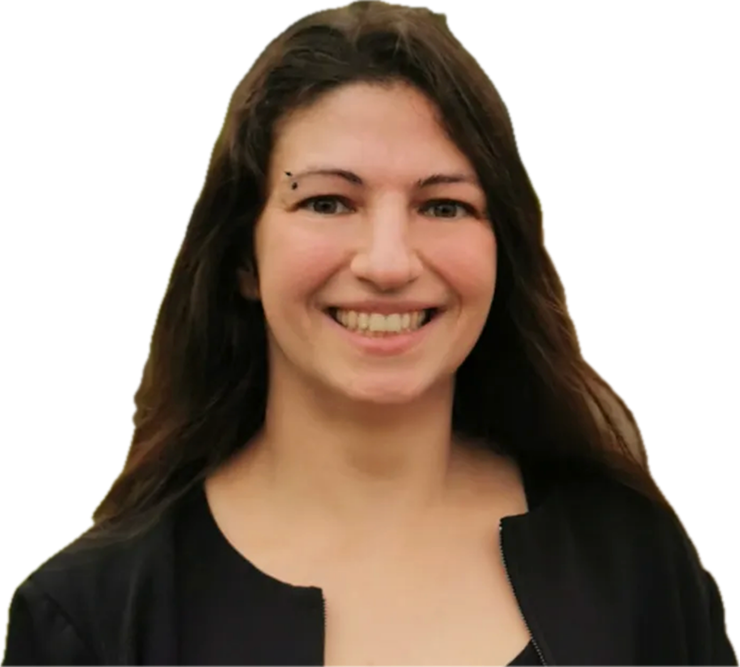
Neal Agarwal, the big mind behind neal.fun. Game designer, web extraordinaire.
Over the course of two scorching summer days in Brooklyn, we talk about games, Scratch, childhood, and the
underappreciated majesty of the web.
K: Can we get fried pickles?
N: The pickles here are giant. They're crazy.
K: Actually? I was imagining the tiny little wimpy ones..
N: Oh no, they're like.. [indicates with his hands]
K: What have you been up to today?
N: I worked on updates to Infinite Craft. The updates did not go well.
K: What do you mean?
N: I was trying to replace the LLM that I'm using. The one I'm using right now is kind of old, really expensive, and not very efficient.
K: How did that change things?
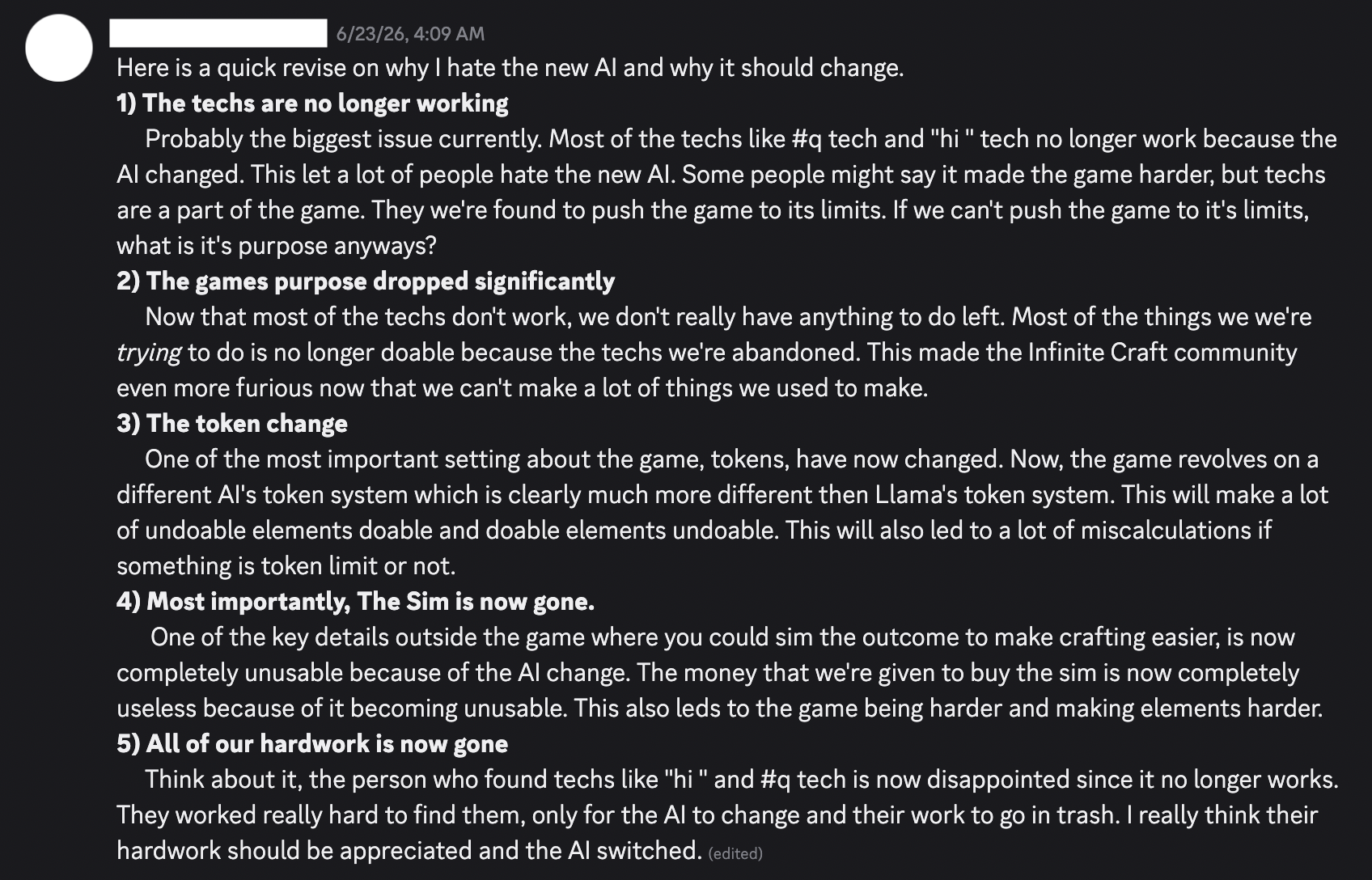
N: I thought not that much. But as soon as I changed it, the Discord blew up. And I didn't even say anything! They've been playing so long that they're attuned in a way that I'm not. I reverted it because I got scared.
K:
The techs are no longer working.
Wait, what are techs
?
N: That's just a term they invented for a specific hack. There's so much that I don't know.
Most
importantly, the sim is now gone.
I don't know what the sim is!
K: Has anything else taken a life of its own?
N: For Absurd
Trolley Problems, people started using it as a benchmark for AI things. So there's like a whole
YouTube video where they tested against Grok and Claude, like a morality benchmark. Some researchers were also
like, we're going to do a paper on this.


N: I made all the questions before I knew how anyone would answer. Some ended up being 90/10, and everyone
was like,
why was that even a question.
I thought it was a moral dilemma…
K: That reveals more about you, I guess.
N: There was one where you run over five crabs or a cat. Everyone was like,
the five crabs.
But there's five of them!
K: The crabs would be more satisfying to crunch.
N: It actually has crunch sounds now. A sound effects guy reached out and was like,
this would be
perfect for my skillset.
K: Walk me through a typical day in the life of Neal.
N: I feel like I'm on a very hunter-esque schedule. In between projects, I end up doing a lot of nothing: reading, watching videos, and filtering things. If there's an idea that catches, I go into 24/7 mode.
K: Yeah, yeah!
N: I try to pace myself, but I just get really excited and work a ton.
K: How do you choose what to work on?
N: I have one big ideas list from high school. If I'm on the fence, I'll show a few people a prototype and see if it has legs. But if I'm not super excited about it, I won't continue. I find it really hard to work on projects I'm not excited about.
K: Are there any you keep coming back to?
N: I let ideas simmer for a long time. I had the idea for the Password Game 3 years before I started working on it. And then I started working on it and I was like, this sucks, stopped for another year, and then I went back to it.
N: Infinite Craft was 5 years from initial idea to actual thing. When I initially thought of it, LLMs didn't exist and it wasn't really possible. I tried scraping Wikipedia so that if you had two articles and you crafted them, they'd go to a third. But it really didn't make much sense, and I was very beholden to what happened to be linked. Then GPT-3 came out and I was like, this is good enough now.
K: Did you set out to make something open-ended, or did that come later?
N: The optimal sandbox is one where people can do stuff you didn't plan for. That was kind of the goal with Infinite Craft. Most of my stuff isn't as open-ended though.
K: Why was this the case for Infinite Craft?
N: I always wanted an endless crafting game. Doodle God was one of the first iOS games I downloaded, but it always frustrated me that if you came up with a clever combination they hadn't thought of, it wouldn't work. So the benchmark was Doodle God, but anything.
N: Internet Road Trip was another thing where I set up the basic seed but had no idea what would happen afterwards.
K: When did you first think of it?
N: Last year? Well, initially, I had the idea that it'd be cool if you were in a Waymo and people could control it. I didn't know how to do that, so this was the next best thing. In general, I was just interested in the idea of the internet having to decide on something and the mechanics of coming to some kind of agreement.
K: And what did the Internet decide?
N: There's whole subcultures, like bird watching, that happen down there. People made fan art because you
can't actually see the car you're driving in the game. There was an in-game radio station, so players started
calling into the radio station while it was live on the site. They were like, you're on Internet Road
Trip right now
and the host would be like, what's that?
A student-run radio station
ended up joining the Discord, and when they graduated, everyone in the chat was honking to celebrate.
It was also funny how it felt like a real road trip. There was a lot of backseat driving. People would get
frustrated if we missed a turn. Some people were sightseers who wanted to spend time in a town, and others were
like, let's get to this place, we need to figure it out.
K: What were the first things you did/made on the computer? How did you even get started?
N: Scratch is where I started when I was 11. I made a few games on the App Store when I was 14. One's called Toast Man. You play as a toaster and you have to fire toast at birds.
K: Can we see that?
N: It's not available anymore, I think it died at iOS 12. It also annoyed me that you had to keep asking Apple for permission for everything, and it's really slow. A lot of my more unhinged ideas, I was like, there's no way Apple's gonna let this slide. So that's when I switched to websites.
K: And that switch stuck.
N: The main thing is that it explored the web as a distinct medium. It wasn't just games you play on an Xbox, and now they're on the web. It was a completely different genre of games and it had its own feel to it, its own design language, its own in-jokes, its own community, its own tools. It's a completely separate world.
K: What are the canonical characteristics of a web game?
N: I feel like it's scrappy. It's multimedia. Maybe a little unhinged. I feel like a lot of web games have the characteristic of like, why does this exist? And that's the thing! On the App Store… it's slowly changing, but at least 10 years ago, it was like every app had to justify itself. You weren't allowed to just publish like your own bullshit.
K: Are there Mount Rushmores of web games in your head? You're like, yo, this is canon.
N: The Impossible Quiz was a big one for me. Line Rider. Cookie Clicker, I think, because that was the first big one I saw that wasn't Flash and I was like, oh shit, like you can do this just like without Flash now!
K: What went through your mind about going full time?
N: The big thing for me was that I was worried I would just make stuff that would go viral and then I would have to keep making stuff that went viral, otherwise it wouldn't be sustainable. But by the time I quit my job, Spend Bill Gates' Money was already 6 years old and getting as much traffic as before. So I was like, OK. This isn't just like a virality thing, this is pretty stable, and if I just keep making stuff it will get more stable over time.
K: What would salaryman Neal be like?
N: I don't think it would have worked out. I was always really bad at listening to directions, especially someone top-down telling me what to do. I would always do the opposite out of spite.
K: Have you thought about making physical games, or a toy?
N: Sounds tough… In the long run.
K: You probably need something before the theme park. What's top of mind for you, in the meantime?
N: I'm interested in what you can combine with the web. It's a medium of mediums. You can combine everything if you want.
K: Almost ten years later, what still makes you excited about it?
N: It's fun! And just the fact that this is still a new medium and no one knows what it's capable of yet. It feels cool that I'm 28 and websites are like 32 years old; we're in the same age range. I got to be one of the first people trying to figure things out. I imagine this is a medium that's going to exist for hundreds of years. Getting to say, oh yeah, I was there when the printing press was new, getting to make the first mystery novel, the first sci-fi book. There are all these genres that probably haven't been invented yet.
K: It really is crazy that people aren't doing more with websites. It's hypermedia, it's interactive, it's portable. What's the hold up?
N: When Flash died, that was a big setback. People had figured out how to do all this cool stuff, and then everyone had to start from scratch. And a lot of the stuff wasn't even available yet. You really did have to be somewhat of a software engineer to do a lot of the more interactive stuff. There was no real shortcut.
K: What do you think the world looks like for games now that this is changing?
N: A lot more people are making things, a lot more experiments. There's still knowledge you need to have,
and I don't think you can just say make good game, make no mistakes
. I use LLMs often, but I
still
have a sense of what's possible because I've spent so much time doing it manually. I'm kind of skeptical that
you
can skip all of that completely. But it's definitely easier to get started.
K: What would you tell someone starting out now?
N: I mean, the common advice is to start small. A lot of people get into game dev and they're like, I'm gonna make an MMO RPG like Skyrim, and immediately get overwhelmed and quit. Making the simplest possible thing is a good way to start. Web games in particular are very constrained. You don't have to worry about things like a 3D engine or character models or animation. You have very basic ingredients. Can you make something fun with those basic ingredients?
K: Is there something you're still trying to figure out — about making games, or about yourself through making them?
N: I'm definitely more of a plant-a-seed-and-see-where-it-goes kind of guy. Not a planner. When I work on a project I usually have no idea what I'm going to do, but I know the next cool step. I thought most people were like that, but then I meet planners and they know everything about their game beforehand.
K: How has working with other people changed that?
N: It's tough because you have to tell people what you're planning to do, but a lot of the time they don't know what I'm planning to do. I'm still not at the point where I'm co-making something. It's usually more like I have these assets and I work with artists and musicians, but I'm still the one putting everything together. So I haven't figured out yet how to not be the bottleneck on everything.
K: What question do you have for our next guest?
N: What age was rock bottom for you?
K: OK. What was rock bottom for you?
N: Oh no, I thought it was…
K: I know, I know!
N: My answer is today. This interview.
K: We're going to make something up.